Recovery is where performance is won or lost. Most athletes understand the fundamentals: sleep enough, eat well, and stay hydrated. These are non-negotiable. But once you have the foundations locked in, a second tier of evidence-supported tools can meaningfully accelerate how fast your body bounces back. Ice baths, compression garments, and massage therapy each have a growing body of research behind them - and when used strategically, they can help you train harder, feel better, and reduce the risk of injury.
Why the Fundamentals Come First
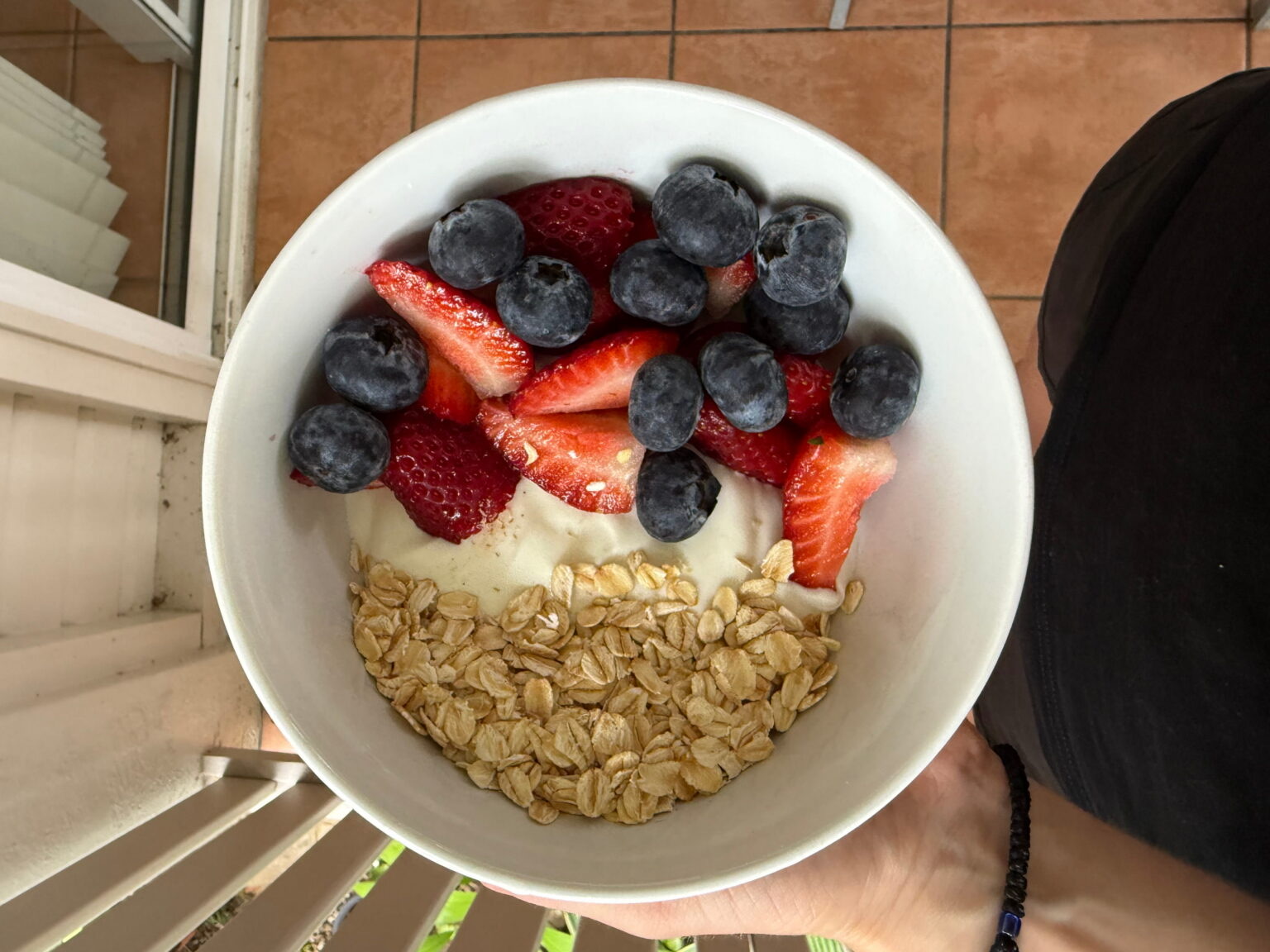
Before diving into the "extras," it's worth being clear: no recovery modality will compensate for poor sleep, inadequate nutrition, or chronic dehydration. These three underpin every physiological repair process - from protein synthesis to glycogen replenishment to hormonal regulation. Think of ice baths, compression, and massage as amplifiers, not replacements. Once the foundations are solid, these tools give you an edge.
Ice Baths: Cold, Calculated Recovery
Cold water immersion (CWI) is one of the most researched recovery tools in sports science. The protocol typically involves immersing the body in water cooled to 10-15°C for 10-15 minutes. When you enter cold water, blood vessels constrict, reducing acute inflammation and metabolic waste in the working muscles. As the body rewarms, blood flow surges back, delivering oxygen and nutrients to fatigued tissue.
The evidence for reducing delayed onset muscle soreness (DOMS) is compelling. A 2012 Cochrane Review meta-analysis found cold water immersion significantly more effective than passive rest for reducing DOMS at 24, 48, and 96 hours post-exercise (Bleakley et al., 2012). A more recent meta-analysis confirmed that CWI reduces post-exercise muscle stiffness, eliminates fatigue, decreases exercise-induced muscle damage, and improves athletic performance in subsequent efforts (Xiao et al., 2023).
However, timing and context matter enormously. Research published in the Journal of Physiology found that regular post-exercise CWI, while effective for short-term recovery, may attenuate long-term muscle growth signals. Systematic reviews have found regular post-workout cold exposure may reduce muscle growth by approximately 10-20% over training periods of 6-12 weeks. The practical takeaway - use ice baths strategically during competition blocks and high-volume training phases, but not after every strength session. For endurance athletes and those competing in back-to-back events, CWI at 10-15°C for 10-15 minutes within an hour of intense effort is well supported by the evidence.
Compression: The Gentle Squeeze That Works
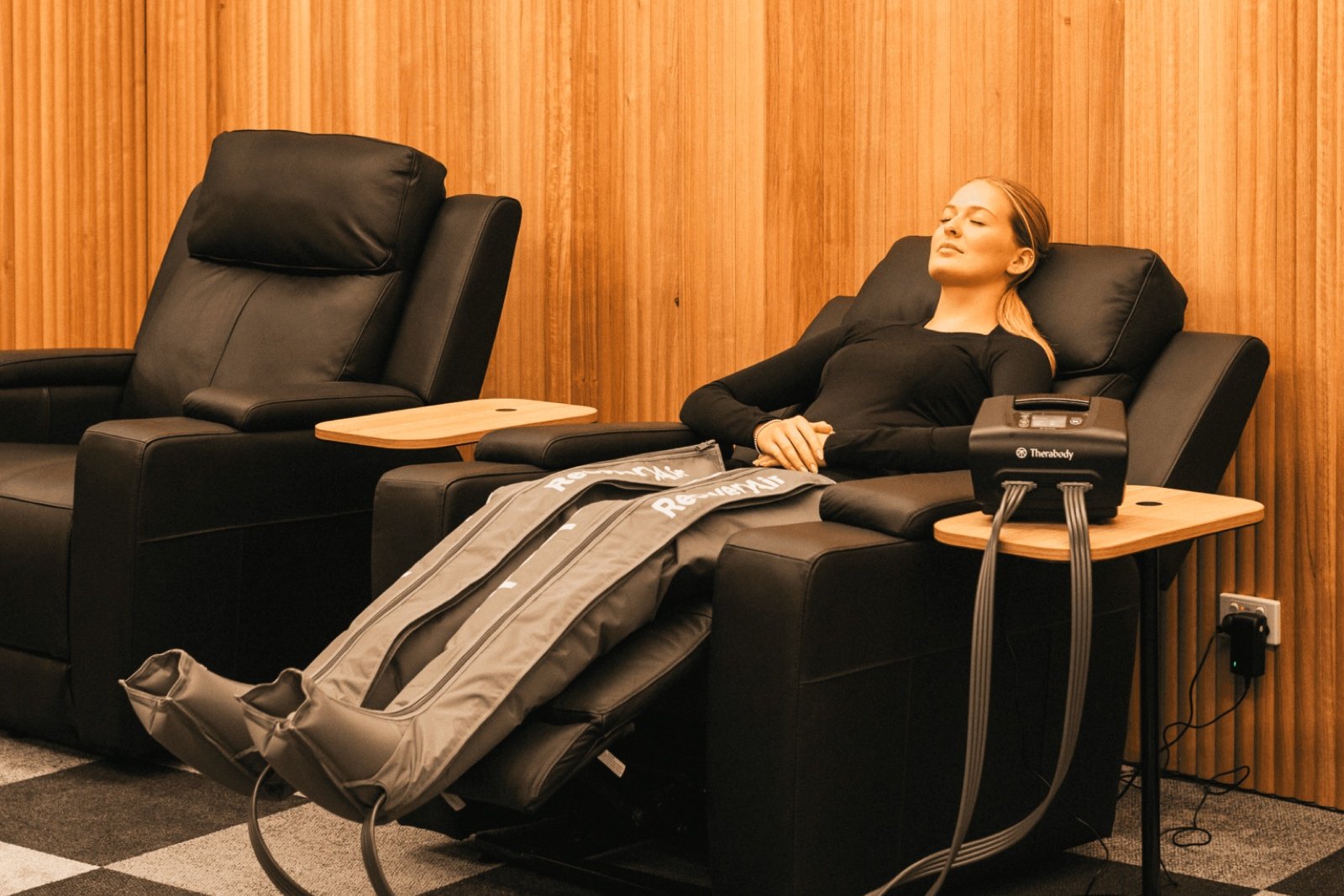
Compression garments - tights, sleeves, and shorts - work by applying graduated external pressure to limbs, improving venous return, reducing muscle oscillation during exercise, and limiting post-exercise swelling.
A systematic review and meta-analysis (Hill et al., 2014) found that compression garments promote more rapid recovery of muscle function, reduce muscle soreness, and attenuate circulating creatine kinase (CK) - a key marker of muscle breakdown - compared to a control group. The same review found that 69% of the population will experience accelerated recovery of strength, and 66% will experience accelerated recovery of power, when using a compression garment.
In a 2022 systematic review Weakley et al. found that compression garments generally improved jump and sprint performance recovery, with the strongest effects observed in the first 24-48 hours post-exercise. A more recent 2025 meta-analysis by Pournot et al., specifically examining compression garments on muscle strength and power recovery, confirmed significant recovery benefits, recommending their use particularly for athletes competing across consecutive days.
For best results, put compression garments on as soon as possible after training and wear them for the remainder of the day - or even overnight. The first 24 hours appear to be the most critical window.
Massage: More Than Just Relaxation
Sports massage has long been a staple of elite athletic recovery, and the science is increasingly supportive. Meta-analyses involving over 500 participants have consistently demonstrated that massage therapy reduces DOMS by approximately 13-30% compared to passive recovery. A BMJ Open Sport & Exercise Medicine systematic review found massage was associated with a statistically significant 13% improvement in DOMS measures after exercise.
Massage reduces pro-inflammatory markers including interleukin-6 (IL-6) and creatine kinase, while supporting calcium homeostasis in muscle fibres - reducing abnormal muscle excitability and spasm. A narrative review in Sports Medicine noted that while massage's effects on objective muscle force recovery are inconsistent, its benefits for soreness and inflammatory markers are well-supported, particularly at 48 and 72 hours post-exercise.
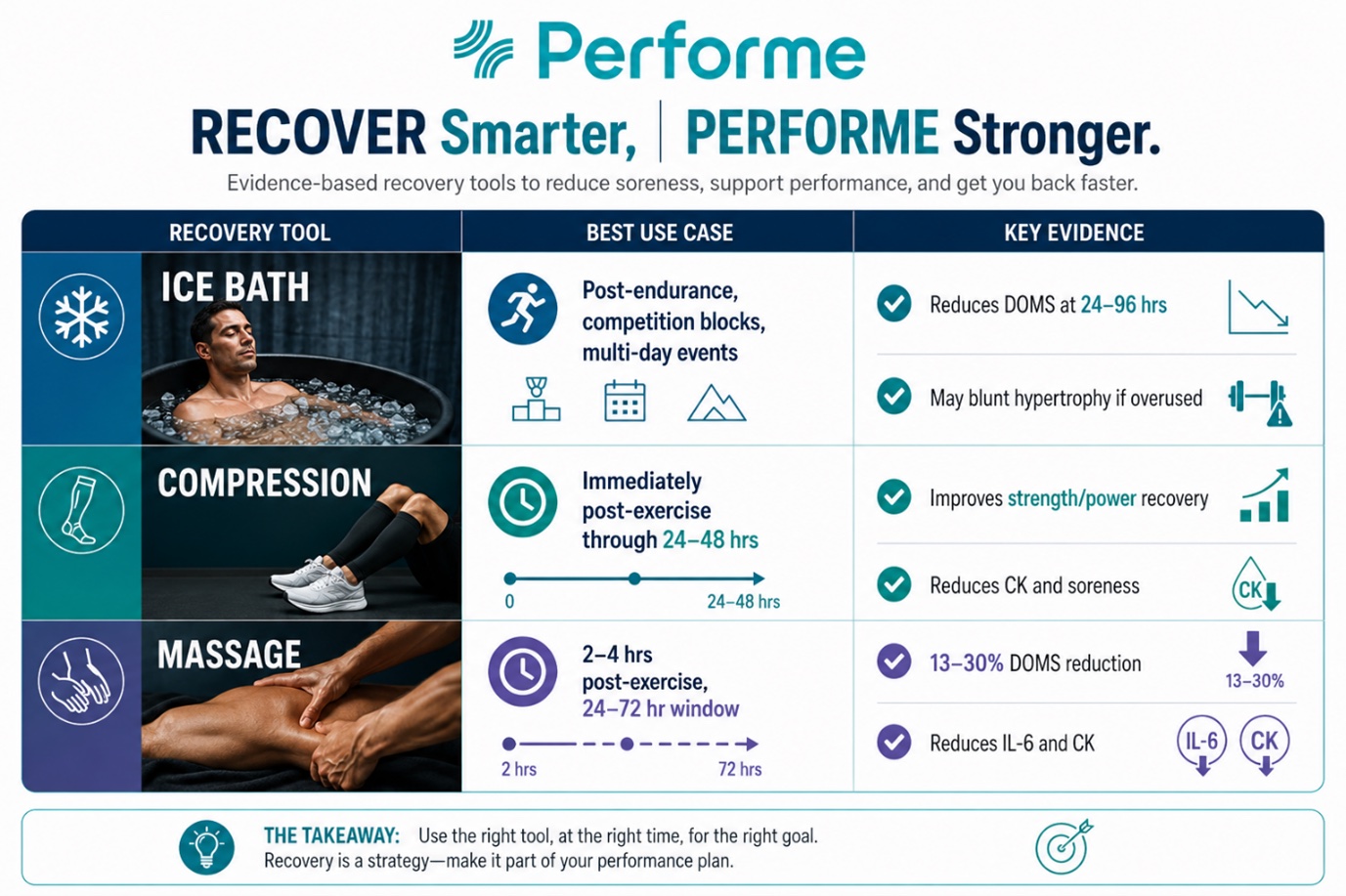
Timing is key. Massage is most effective when applied 2-4 hours after intense exercise, rather than immediately post-training. For athletes managing back-to-back sessions, a phase-specific approach works best: CWI first during the acute inflammatory phase (0-24 hours), followed by massage in the 24-72 hour window to regulate pain and support tissue repair.
Putting It All Together
Recovery is not one-size-fits-all, and no single modality covers all bases. The evidence supports a layered approach:
When built on a foundation of quality sleep, optimal nutrition, and adequate hydration, these three tools offer a meaningful, evidence-backed boost to your recovery toolkit. Use them strategically, not reflexively, and let the science guide when and how. If a sports injury is affecting your training load, our sports physiotherapy Melbourne team at Performe can help you build a full recovery plan around your goals.
References
- Bleakley, C., McDonough, S., Gardner, E., Baxter, G. D., Hopkins, J. T., & Davison, G. W. (2012). Cold-water immersion (cryotherapy) for preventing and treating muscle soreness after exercise. Cochrane Database of Systematic Reviews, 2012(2), CD008262. Bleakley et al., 2012, Cochrane Database of Systematic Reviews
- Hill, J., Howatson, G., van Someren, K., Leeder, J., & Pedlar, C. (2014). Compression garments and recovery from exercise-induced muscle damage: A meta-analysis. British Journal of Sports Medicine, 48 (18), 1340-1346. https://doi.org/10.1136/bjsports-2013-092456\
- Hu, M., et al. (2023). Effects of cold water immersion after exercise on fatigue recovery and exercise performance: Meta-analysis. Frontiers in Physiology. https://pmc.ncbi.nlm.nih.gov/articles/PMC9896520/
- Marqués-Jiménez, D., Calleja-González, J., Arratibel, I., Delextrat, A., & Terrados, N. (2016). Are compression garments effective for the recovery of exercise-induced muscle damage? A systematic review with meta-analysis. Physiology & Behavior, 153, 133-148.
- Overmayer, R. G., & Driller, M. W. (2022). Putting the squeeze on compression garments: Current evidence and recommendations for future research. Sports Medicine Open. https://pmc.ncbi.nlm.nih.gov/articles/PMC9023423/
- Pournot, H., et al. (2025). Effects of compression garments on muscle strength and power recovery post-exercise: A systematic review and meta-analysis. Life, 11;15(3):438/
- Tee, J. C., Bosch, A. N., & Lambert, M. I. (2007). Metabolic consequences of exercise-induced muscle damage. Sports Medicine, 37 (10), 827-836.
- Wan, J., et al. (2025). The impact of various post-exercise interventions on the relief of delayed-onset muscle soreness: A randomized controlled trial. Frontiers in physiology 16 (2025): 1622377
- Weerapong, P., Hume, P. A., & Kolt, G. S. (2005). The mechanisms of massage and effects on performance, muscle recovery and injury prevention. Sports Medicine, 35 (3), 235-256.
- Zainuddin, Z., Newton, M., Sacco, P., & Nosaka, K. (2005). Effects of massage on delayed-onset muscle soreness, swelling, and recovery of muscle function. Journal of Athletic Training, 40 (3), 174-180. https://pmc.ncbi.nlm.nih.gov/articles/PMC1250256/
- Davis, H. L., et al. (2020). Effect of sports massage on performance and recovery: A systematic review and meta-analysis. BMJ Open Sport & Exercise Medicine, 6 (1), e000614. https://bmjopensem.bmj.com/content/6/1/e000614
- Marques-Jimenez, D., et al. (2023). Mechanisms and efficacy of massage therapy for post-exercise muscle repair: A narrative review. Sports Medicine and Health Science. Marques-Jimenez et al., 2023, Sports Medicine and Health Science
- Weakley, J., Broatch, J., Bishop, D. J., & Halson, S. L. (2022). Putting the squeeze on compression garments: Current evidence and recommendations for future research: A systematic scoping review. Sports Medicine, 52(5), 1141-1160. Weakley et al., 2022, Sports Medicine
- Xiao, F., Kabachkova, A. V., Jiao, L., Zhao, H., & Kapilevich, L. V. (2023). Effects of cold water immersion after exercise on fatigue recovery and exercise performance: A meta-analysis. Frontiers in Physiology, 14, 1006512. Xiao et al., 2023, Frontiers in Physiology