

Running Physiotherapy
Melbourne
Most running injuries aren't accidents. They're the end point of a pattern.
Proud to be associated with












We are committed to providing outstanding patient care in a friendly and welcoming environment.
Biomechanical running assessment, not just hands-on treatment
Training load that crept up too fast, a stride mechanic that overloads one structure thousands of times per run, or a strength deficit your body has been compensating for. At Performe, running injuries start with a biomechanical running assessment, because treating your shin splints without finding out why you got them means you'll be back in three months with the same problem.
Our running assessment looks at the whole picture:
- Video gait analysis: cadence, stride mechanics, foot strike, pelvic control.
- Strength testing: calf, glute, hamstring and quadricep strength, single-leg control and balance, to chase the deficits that show up as injuries 10km into a long run.
- Training load review: we review your weekly training beyond just distance, diving into intensity, surface, progression and scheduling. The cause of a running injury is often a load spike, not a biomechanical flaw.
- Footwear and surface review where this may be influencing your injury.
You leave with specific findings and a plan, not a vague instruction to “rest and stretch.”
Located in the Olympic Park precinct, we're on the doorstep of the Yarra trails and the Tan, the training ground for a large share of Melbourne's running community.
Book an Appointment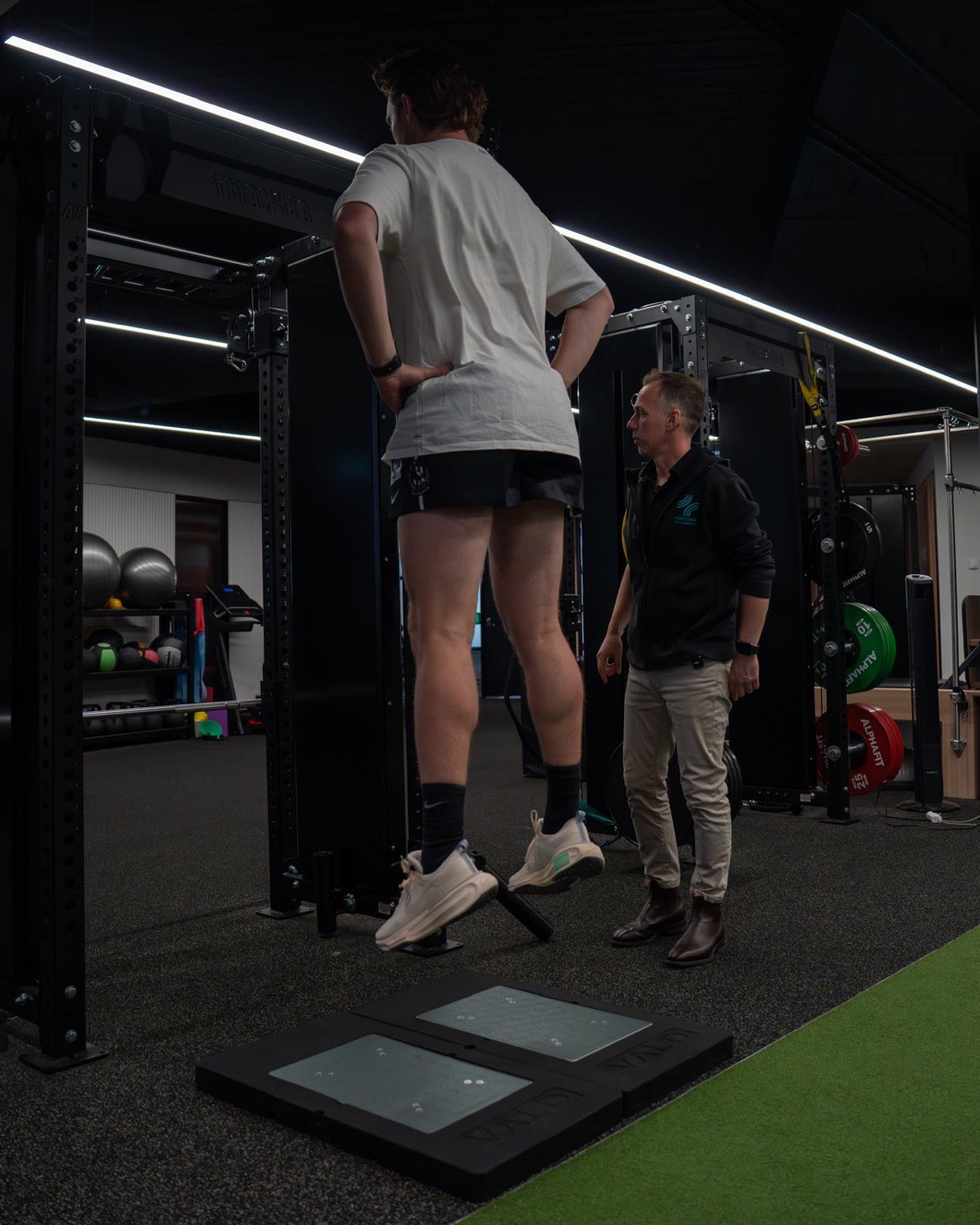

Common running injuries we treat
- Shin splints (medial tibial stress syndrome)
- Bone stress injuries and stress fractures
- Achilles tendinopathy
- Runner's knee (patellofemoral pain)
- ITB syndrome
- Plantar fasciitis and plantar heel pain
- Calf strains
- Proximal hamstring tendinopathy
Simply click through to our booking platform to reserve your appointment with one of our sports physiotherapists.
Book an Appointment
Our approach to running rehab
Rest is rarely the plan. For most running injuries, evidence supports modifying load rather than complete shutdown, keeping you running where it's safe to do so while the injured tissue builds strength and capacity. We set a clear weekly structure of when you can run, what strength work to do, and the benchmarks that unlock the next stage.
For bone stress injuries and complex cases, our in-house sports medicine physicians can arrange imaging and coordinate care without you needing to chase referrals across town.
Should I stop running completely with an injury?
Usually not. For most tendon and soft-tissue injuries, the goal is to find the level of running your body currently tolerates and build from there. The main exceptions are bone stress injuries, where a period off running is often genuinely required, which is exactly why getting an accurate diagnosis first matters.
What happens in a running assessment?
A detailed history and discussion around your injury and training, video analysis of your running technique, and strength testing of the key muscle groups for runners. You'll get specific findings and a written plan covering running load, strength work, and any technique changes worth making.
How do I know if my shin pain is shin splints or a stress fracture?
You often can't tell from symptoms alone, and the distinction matters.. Focal pain, night pain, or pain that worsens through a run are warning signs. We assess clinically and can arrange imaging through our sports medicine team if a stress fracture is suspected.
Can you help me build up for a marathon after injury?
Yes. We build return-to-running programs around your event date, working backwards from race day to structure realistic volume progression alongside your rehab.
Where to find us
Performe Sports Medicine Address
Clinic Hours
Monday to Friday, 8am to 5:30pm
Getting Here
Performe Sports Medicine is located in Melbourne's Olympic Park area. Accessible by tram and public transport. Parking available nearby.

Find Out Why It Keeps Happening
Our running physiotherapists will assess your gait, your strength and your training load, then give you a plan that keeps you running. Book online or call the clinic to speak with a physiotherapist today.